



There are four special exhibitions on view now at The Museum of Kansas City. Admission is free to these exhibitions.
Homeland: The Osage in Missouri and Voices Now: Contemporary Native American Art are on view through February 21, 2027. These exhibitions are organized by The Museum of Kansas City to recognize the 250th anniversary of the United States through the extraordinary history, culture, and art of America’s Indigenous people and particularly those with ancestral connections to the Kansas City area. These exhibitions offer visitors the opportunity to engage with America’s complex, layered histories through Indigenous storytelling, tradition, and artistic innovation.
Homeland: The Osage in Missouri
On view now – February 21, 2027
Exhibition is free, no tickets required.
This exhibition is located on the second floor in The Jean and Tom McDonnell Gallery.
Organized by The Museum of Kansas City, Homeland: The Osage in Missouri is curated by Jimmy Lee Beason II, a citizen of the Osage Nation and professor of Indigenous and American Indian Studies at Haskell Indian Nations University. Featuring materials from the Museum’s collection and items loaned to the Museum, this exhibition centers the Osage culture and worldview while exploring how the Osage were affected by and adapted to European settlement and industrialization.
Osage history is deeply rooted in the waterways and landscapes of Missouri, which is the ancestral home of the 𐓏𐓘𐓻𐓘𐓻𐓟 | Wah-zha-zhe | Osage People, originally known as 𐓁𐓣𐓶𐓤𐓪͘𐓮𐓤𐓘 | Ni-u-kon-ska | People of the Middle Waters. Although the Osage Nation is centralized in what is now the state of Oklahoma, their spiritual and cultural connection to Missouri endures. Homeland: The Osage in Missouri explores and celebrates the history, heritage, worldview, and cultural continuity of the Osage people.
Generous support for Homeland is provided by the Missouri Humanities Council (MHC), which is the only statewide agency in Missouri devoted exclusively to humanities education for citizens of all ages. It has served as a state affiliate of the National Endowment for the Humanities since 1971. Additional support is provided by the Sosland Foundation and corporate members including Commerce Bank, Dillingham Enterprises, Inc., Evergy, International Architects Atelier, JE Dunn Construction, Mark One Electric, and Milbank Manufacturing.
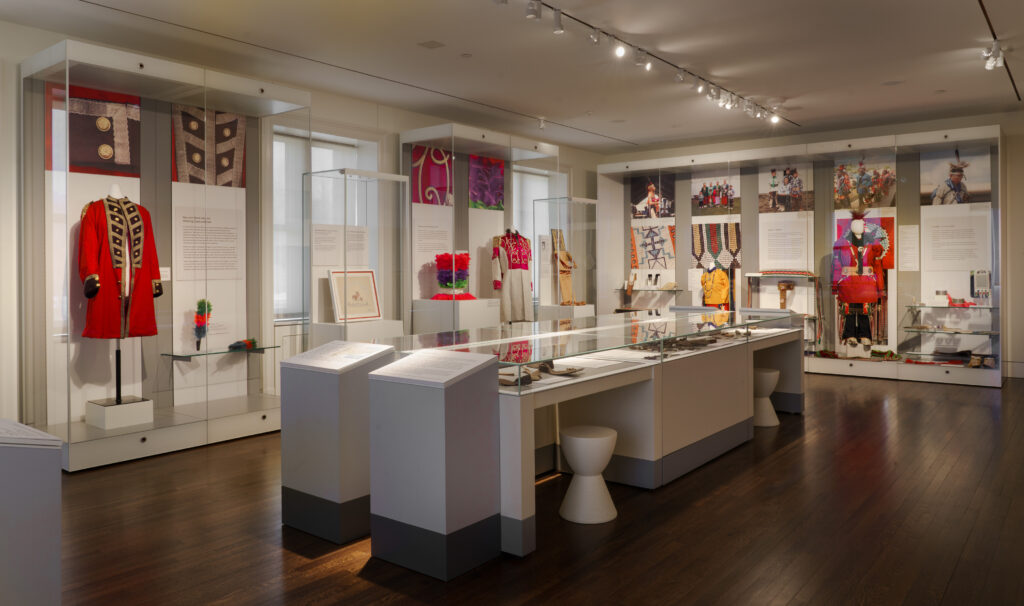
Photo by E.G. Schempf

Voices Now: Contemporary Native American Art
On view now – February 21, 2027
Exhibition is free, no tickets required.
This exhibition is located in the changing gallery on the third floor and expands beyond this gallery with installations in Homeland, the second-floor corridor, and the grand stair landing.
Organized by The Museum of Kansas City, Voices Now is co-curated by Dr. Jami Powell, Associate Director for Curatorial Affairs & Curator of Indigenous Art at the Hood Museum of Art, Dartmouth College, and Bruce Hartman, Founding Executive Director & Chief Curator (retired) of the Nerman Museum of Contemporary Art.
Voices Now features 15 artists with a variety of tribal affiliations as well as a wide range of artistic mediums and expressions. Fittingly, the exhibition is intergenerational and even includes extended family members. Artists include Norman Akers, Julie Buffalohead, Bruce Caesar, June Carpenter, Lydia Cheshewalla, Tom Farris, Anita Fields, Yatika Starr Fields, Chris Pappan, Wendy Ponca, Ryan RedCorn, Addie Roanhorse, Richard Zane Smith, Jason Wesaw, and Holly Wilson. Norman Akers, Wendy Ponca, Richard Zane Smith, and Holly Wilson are graduates of the Kansas City Art Institute.
Artists in Voices Now have garnered national and international acclaim. Their works address themes of beauty, identity and belonging, the land and environmental issues, colonialism, resistance and subversion, appropriation, relationality, futurity, and more. Their collective voices speak not only to Native America, but America today.
Generous support for Voices Now is provided by the Jedel Family Foundation. Established by well-known art collector and businessman, Harrison Jedel, the Foundation supports a wide range of educational, medical, and arts organizations in the Kansas City area and beyond. This groundbreaking exhibition marks the first contemporary Native art showcase of its kind in Kansas City, celebrating the living history, voices, and visions of Indigenous communities throughout the region.
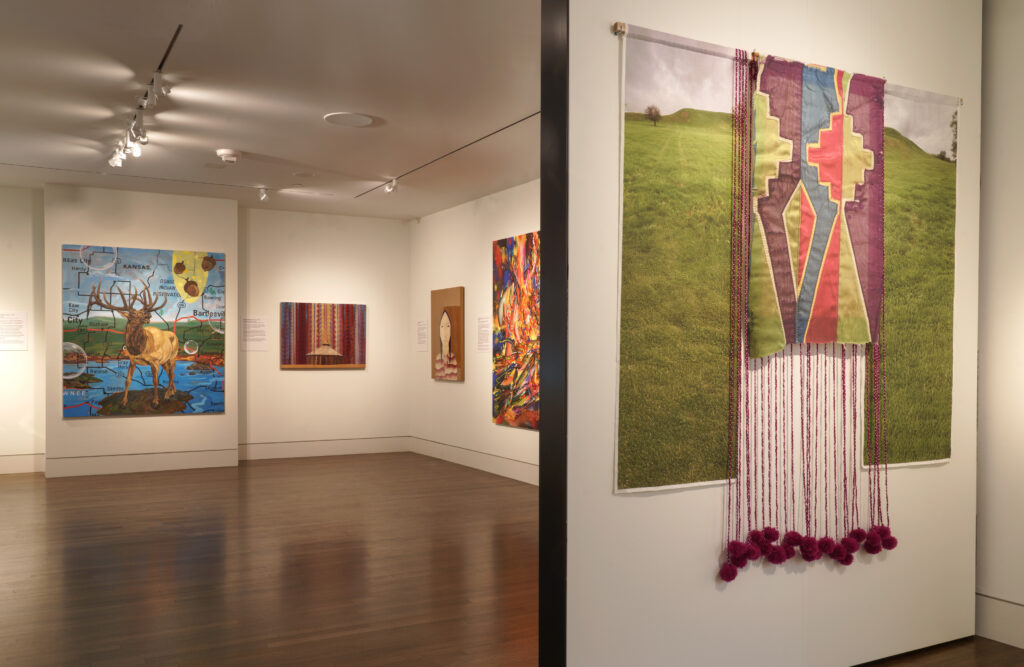
Photo by E.G. Schempf
Connecting Cultures Across Kansas City: The Hand-in-Hand Folk Art Collection
On view now – February 21, 2027
Exhibition is free, no tickets required.
This exhibition is located in the education gallery on the second floor.
Connecting Cultures Across Kansas City: The Hand-in-Hand Folk Art Collection is curated by Mattie Rhodes Center Public Historian Christina Loya in collaboration with The Museum of Kansas City.
Featuring more than 200 rarely seen works of folk art, the exhibition explores how handmade objects preserve cultural identity, connect generations, and reveal shared human experiences across communities.
The collection was started by Kansas City native Alice Ann Biggerstaff (1924–2007), an artist and longtime Hallmark Cards employee whose passion for collecting continued throughout her life. After retiring to Santa Fe, New Mexico, she created a home filled with artwork representing diverse cultural traditions.
Visitors will encounter works by multigenerational artisan families, including ceramics from the Aguilar and Blanco families of Oaxaca and carved wooden creations from the Alvarez and Rodríguez families of the American Southwest. The exhibition also recognizes unnamed makers whose creativity and craftsmanship have contributed to cultural memory.
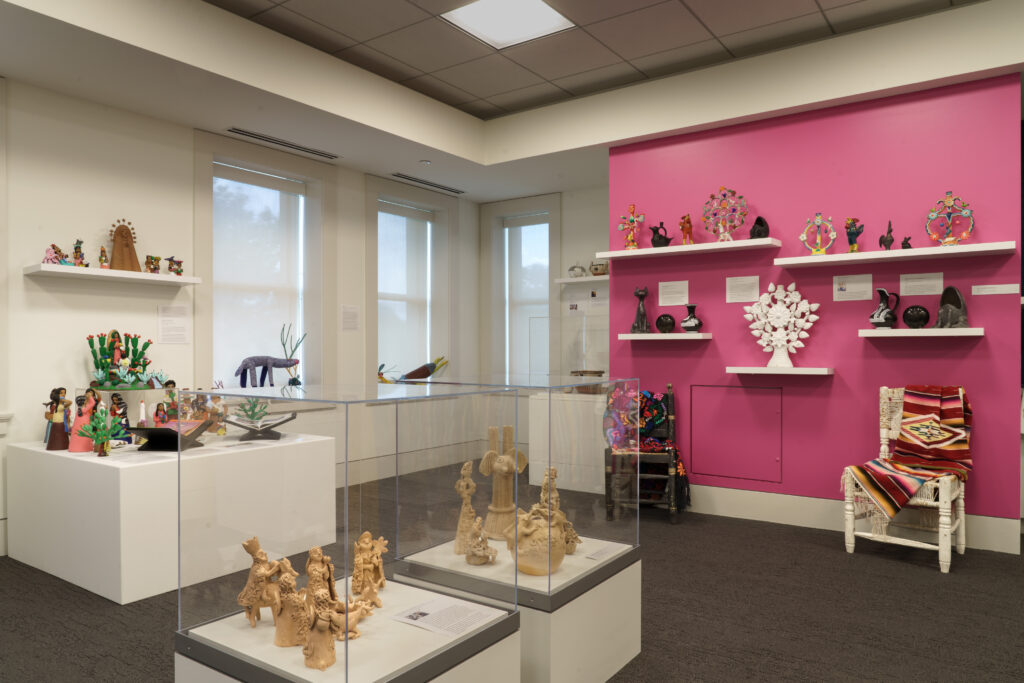
Photo by E.G. Schempf

Dunbar: Kansas City’s First Black Suburb
On view now – June 27, 2027
Exhibition is free, no tickets required.
This exhibition is located on the third floor in A Cultural & Community Restoration: 1970s to Present Day, The Edward F. Swinney Foundation, Bank of America, N.A., Trustee Gallery.
Dunbar: Kansas City’s First Black Suburb explores the legacy of a neighborhood built on resilience, community pride, and collective vision. It highlights the voices and experiences of those who have helped preserve Dunbar’s history while shaping its future.
Organized by The Museum of Kansas City, Dunbar is co-curated by Kathryn Persley, Damon Patterson, and Dr. Jacob Wagner in collaboration with current and former residents Earline Gillum Bentley, Pamela Nicholson Collins, Joan Mathis, Ada Oliver Shaw, Vivienne Starks Smith, and Janice Vertreese. The exhibition is presented in partnership with the Heart of the City Neighborhood Association and the Center for Neighborhoods at the University of Missouri–Kansas City. It is dedicated to the memory of Yvonne Starks Willson (1929–2019) and Anita Dixon-Brown (1956–2026).
Founded in 1915, Dunbar became Kansas City’s first Black suburb, providing residents with opportunities to build homes, businesses, schools, and strong community networks during an era of segregation. Despite challenges including redlining, economic hardship, and natural disasters, generations of residents have worked to preserve the neighborhood’s heritage while envisioning its future. Named for celebrated poet Paul Laurence Dunbar (1872–1906), the community reflects the values found in his writing: dignity, perseverance, and hope.
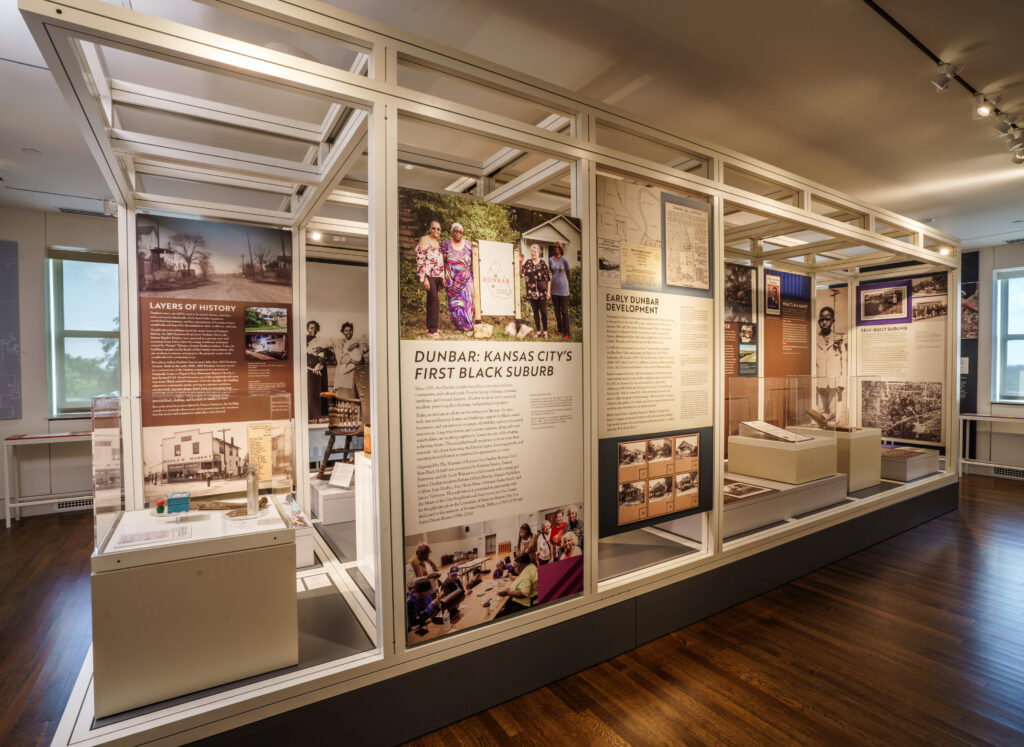
Photo by E.G. Schempf