




Originally built in 1909 to house the Long family’s horses, the historic Carriage House is now being thoughtfully restored and reimagined as a dynamic new educational space on The Museum of Kansas City’s campus. When complete, it will feature three galleries filled with exhibits, interactive experiences, multimedia displays, and art that illuminate the often-untold stories of Kansas City’s agricultural heritage and its enduring impact today.
The Museum is working with IAA on architectural design and G&A on exhibit and experience design. JE Dunn Construction is currently restoring the exterior of the Carriage House while the Museum continues to raise funds for the interior restoration and renovation.
Exhibit & Experience Design
Kansas City is a city in motion. Routes spurred its growth. The Missouri and Kansas Rivers drew Indigenous groups who built thriving communities here long before European arrival. Later, explorers and traders from Spain, Mexico, and the United States traveled the Santa Fe Trail, linking distant markets through Kansas City. Farmers, migrants, and even animals from around the world traveled the trails and rails with their goods, new energy, and innovation—making Kansas City a vibrant center of industry and cultural exchange.
As different groups of people arrived in or passed through Kansas City, they transformed it. They built the livestock, grain, and transportation industries that shaped our city. The influence of these industries still echoes through our region.
By engaging in exhibits and educational programs, visitors to the Carriage House will consider where they come from, where they’re headed, and what kind of place they want Kansas City to become.
The following principles and goals are guiding the Carriage House exhibit and experience design:
1. Foster Pride in Kansas City’s Agricultural Legacy
Celebrate Kansas City’s role as an internationally significant agricultural hub. Showcase the innovation, resilience, and creativity that define the region’s agricultural industries—past, present, and future.
2. Celebrate Regional Ingenuity and Industry
Highlight the ingenuity of Kansas City’s farmers, ranchers, food producers, and agricultural entrepreneurs. Explore how their work connects global markets, sustains communities, and shapes regional identity.
3. Connect Urban and Rural Stories
Strengthen regional connections by sharing stories that link Kansas City to its surrounding small towns and rural communities. Emphasize histories of transportation, migration, and exchange that have long tied the city to the land.
4. Create a Welcoming, Inclusive Environment
Design Museum spaces that make all visitors feel at home—in the galleries, in Kansas City, and in the broader region. Celebrate the diverse ways people experience and create “home.”
5. Empower Youth Through Co-Design and Education
Invite middle school and high school students to co-design exhibits and programs. Offer educational opportunities that encourage youth to tell their own stories, explore agricultural and cultural themes, connect to land, rivers, and communities, and develop creative skills.
6. Invest in Youth Workforce and Career Development
Align the Museum’s Pathways Project to create meaningful creative pathways for youth and young adults (ages 13–23). Offer part-time jobs, paid internships, and mentorship opportunities that build skills, confidence, and a sense of belonging within the museum and cultural sector.

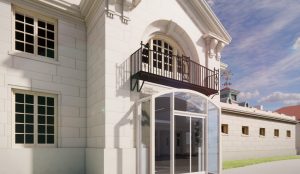
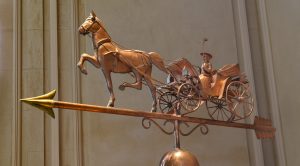
Exterior concept rending by International Architects Atelier. New weathervane on cupola by Ed Dwight.
Art Commission
As part of the Carriage House exterior restoration, the Kansas City Museum Foundation commissioned former astronaut candidate and artist Ed Dwight to design and fabricate The Loula Long Combs & Tom Bass Memorial Weathervane. This striking 60″ x 70″ work—crafted from copper, bronze, ceramic, and wood—honors two figures central to Kansas City’s equestrian legacy. The weathervane is currently on temporary display in Corinthian Hall, awaiting its permanent installation atop the Carriage House cupola once the building’s exterior restoration is complete.
Architectural Design
The Carriage House is approximately 10,301 square feet and has three floors including a basement. When the Long family lived on the property (1910-1934), the first floor of the Carriage House had ten large horse stalls and parking for up to six carriages. The second story provided quarters for grooms and servants.
Although the architecture of the Carriage House is more restrained than that of Corinthian Hall, the same materials were used in its construction—limestone facing, tile roofs, and copper detailing. The Carriage House is externally attached to the Former Horse Trainer’s Home (also called the Lodge).
Windows and doors of the Carriage House were restored and replaced from 2005-2012; however, there has not been any significant additional exterior or interior restoration and renovation until now.
The exterior of the Carriage House is currently undergoing full restoration of the limestone masonry, sheet metal, and clay tile roof, as well as new upgrades to windows and doors.
On the interior of the Carriage House, much of the original architectural fabric and décor remains on the first floor (4,866 square feet) of the Carriage House. The first floor of the Carriage House will be preserved, restored, and rehabilitated architecturally and used for exhibitions and programs. A new elevator and new egress staircase will be added to the Carriage House to connect all floors for code compliant egress and ADA compliance.
The second floor (3,002 square feet) of the Carriage House will be rehabilitated into administrative and programming space for Museum staff and humanities partners.
The HVAC system is located within the original boiler room in the basement (2,433 square feet), and it will be modified for temperature and humidity control. The existing cooling tower is outside and underground, to the west of the Carriage House, and that will be relocated on the property.
The image shown at the top of this page is a concept rendering by International Architects Atelier.
As construction continues, more information will be updated on the Museum’s website.